


SECURITY PROGRAMS CREATED AND OPERATED USING THE INDUSTRY’S BEST PRACTICES
Securing over 500 healthcare and medical facilities across North America, our team of experts help create safe cultures with patient-centric security programs that are proven to keep healthcare environments secure.
We offer an unmatched collection of dedicated healthcare security services but the real value we provide is in the tailored programs that we create for the security risks facing your healthcare facility.
- Professionally trained healthcare security officers
- High-risk patient watch services and patient safety aid programs
- Emergency Department and other high-risk department staffing
- Workplace violence prevention and safe patient management
- Parking and valet management
- Healthcare security consulting and a vast array of healthcare-specific risk, training and investigative services
- Security systems technology
Our experts' entire careers are in healthcare security. Their experience is at your disposal.
Our experts grew up in healthcare and are actively involved in shaping the healthcare security industry today. The healthcare industry turns to Paladin’s team to address the most pressing security issues, whether determining policies, building industry standards and guidelines, leading training initiatives, or speaking at thought-leadership events. You can be confident in our abilities — and, more importantly — assured that your healthcare security program meets the standard of care expected of a high-performing security program. We reinforce our commitment to the highest standards by providing dedicated career paths that fuel a sustained leadership pipeline. An example of this is when our client, Trillium Health Partners, won the prestigious Lindberg Bell Award for their outstanding security program, the first Canadian program to receive the award.

WHEN AN INCIDENT HAPPENS, YOU WANT US TO RESPOND.
Our services start with our specialized healthcare security officers, and that means hiring and training the right people. Our experts influence IAHSS best practices and we lead the way in patient-centric training and focus on the safety and well-being of staff and patients. Our foundational officer training far exceeds security industry standards. When coupled with our renowned healthcare training system, our officers are equipped with the tools, knowledge and resources to proactively manage patient and visitor-generated violence, and excel in their job of keeping healthcare safe. Our selection standards and quality training produce confident officers that result in less staff and patient injuries.
Security staffing services
We can provide all security departmental levels, from security officers to positions of leadership. We have the training standards and systems for each level, and can confidently supply our team with additional tools and defensive equipment if desired.
Complementing our security guard services, we offer:
- Security operations centres
- Mobile and bike patrol
- Visitor screening and other front door ambassador services
- Emergency, on-demand, and surge capacity coverage
- Automated physical security patrols and artificial intelligence (AI)
Training and Consultation
Paladin’s industry leaders can provide your facility with healthcare-specific risk, training and security consulting:
- Security vulnerability assessments
- Accreditation preparation and regulatory compliance reviews
- Focused reviews on areas of higher risk
- Violence risk assessments
- Active assailant training
- Violent patient management training programs and initiatives for healthcare staff
- Healthcare violence training and response programs for emergency department ambassadors, high-risk patient watch and patient safety aid programs
 The Difference Makers: A Paladin Security Podcast
Check out The Difference Makers Podcast for a first-hand look into the world of security with tips and stories for everyone from healthcare industry professionals.
- Why Healthcare Security
Paladin’s industry leaders can provide your facility with healthcare-specific risk, training and security consulting.
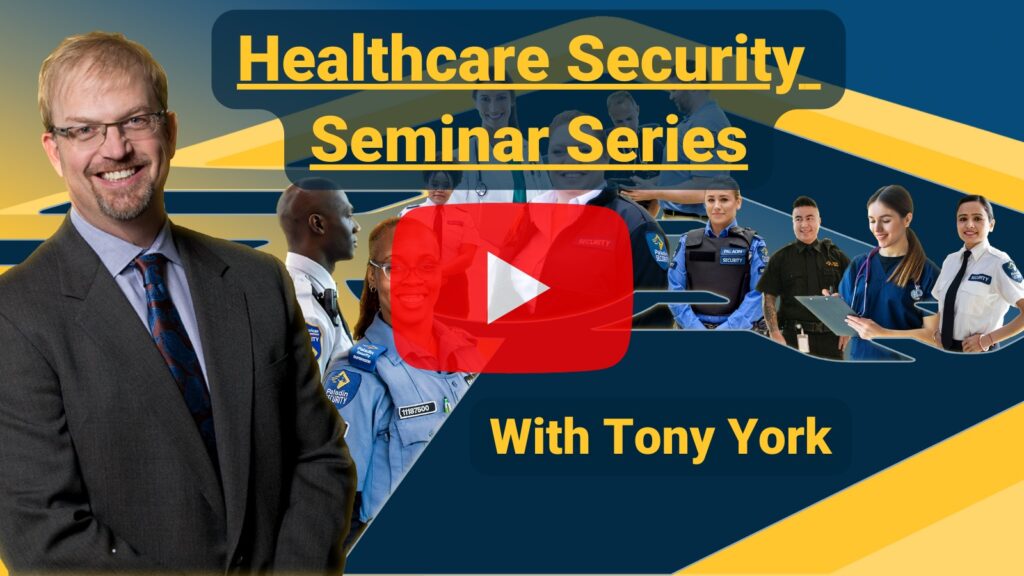
- Tony York's Healthcare Seminar Series
Our experts literally wrote the book on healthcare security, and now you can learn from the most influential voices in the industry.
- The Paladin Difference
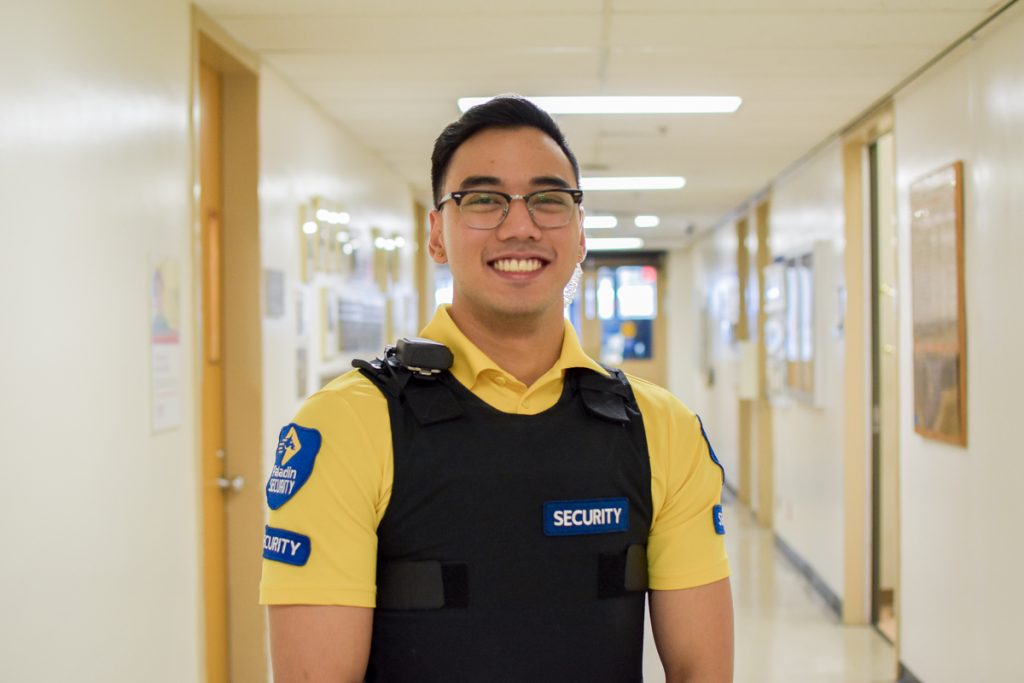
Our Healthcare Security Officers have one of the most fulling jobs. Their uniforms are a symbol and a calling of safety that welcomes others to approach them for help.


One point of contact for all your Healthcare needs
We support our clients at every step. The Paladin group of companies offers experts across a range of services needed by healthcare environments. Here’s how we can help:
Paladin Risk Solutions
- Investigation services: drug diversion, legal and complex investigations, and advisory solutions
- Executive protection, high-profile background investigations and due diligence, and OSINT services
- Emergency preparedness, resiliency and business continuity
Concord Parking
- Parking management solutions, valet, and concierge services
Paladin Technologies
- Security technology planning and implementation, and healthcare-specific design build—we specialize in new healthcare construction and renovation security design

Newfoundland and Labrador (NL) Health Services provides quality health care to all residents of the province.
The leaders at Paladin have the ability to think beyond the “ask” of an RFP. You just don’t get that level of thinking or engagement through other security providers. They have brought recognition and importance to Health Care Security across Canada.
KEY SERVICES FOR HEALTHCARE
- GUARD SERVICES
Industry leading security guard services for healthcare facilities.
- PATIENT WATCH
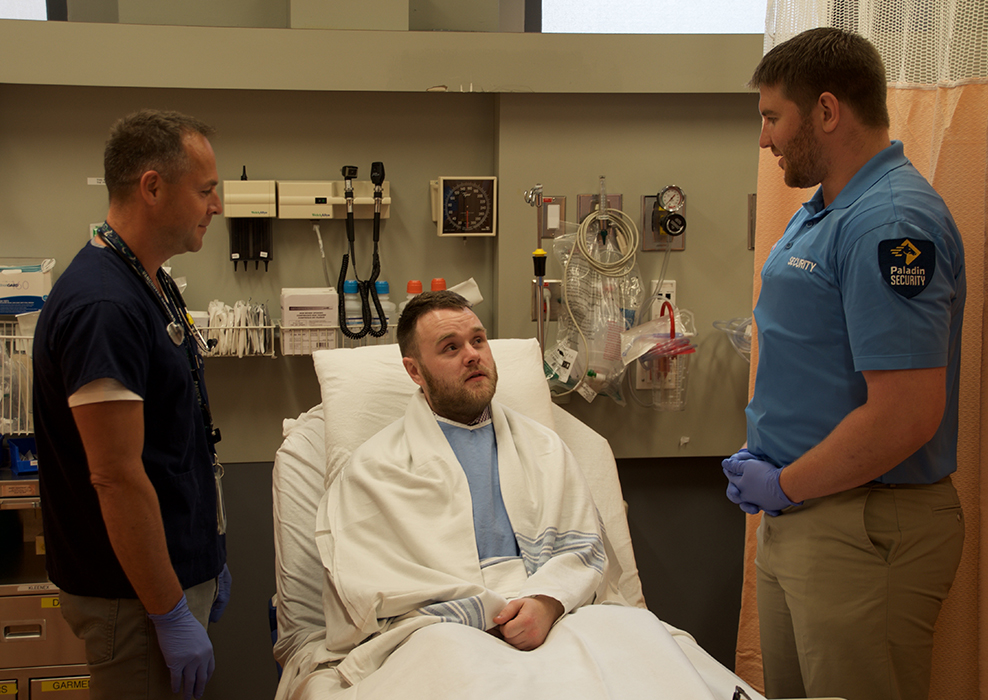
Managing patient behaviour under clinical direction
- SECURITY CONSULTING
Security consulting services for the healthcare industry

FAQs
How can healthcare security help improve staff safety?
Paladin’s healthcare security teams enhance staff safety through a visible presence, rapid incident response, workplace violence prevention initiatives, and skilled de-escalation in high-stress situations. Beyond physical protection, an effective security program promotes psychological safety by giving caregivers confidence that concerns will be addressed quickly and appropriately.
When staff feel safe and supported, engagement improves, stress and burnout are reduced, and retention is strengthened. At the same time, a professional, service-oriented security presence contributes to a welcoming and secure environment that positively impacts the patient and visitor experience. A well-designed healthcare security program helps foster a culture of safety, support, and trust that benefits caregivers, patients, and families alike.
Is Paladin Security the leader in Healthcare Security in Canada?
Yes. Paladin is recognized as Canada’s healthcare security leader, delivering specialized healthcare security services from coast to coast and supporting many of the nation’s leading healthcare organizations. Our program is built on healthcare-specific training, industry-leading workplace violence prevention and response strategies, and decades of experience in complex care environments.
Paladin’s healthcare practice is led by Tony York, one of North America’s foremost healthcare security experts and author of Hospital and Healthcare Security, the industry’s definitive reference guide. Supported by a national team of CHPA-certified professionals, Paladin continues to help shape healthcare security standards, best practices, and professional development across Canada.
What security challenges do healthcare facilities face?
Healthcare facilities face complex security challenges because they operate in high-stress, highly public, and often unpredictable environments. Among the most significant risks is patient-generated violence, including threats, verbal abuse, aggression, and physical assaults involving patients or visitors. These incidents are particularly common in emergency departments, mental health settings, acute care units, and long-term care environments where individuals may be experiencing crisis, pain, intoxication, cognitive impairment, or emotional distress.
Healthcare organizations must also address unauthorized access, visitor conflicts, elopement risks, theft, emergency incidents, parking and perimeter security concerns, and the protection of vulnerable patients, staff and sensitive areas. Meeting these challenges requires more than a visible security presence. Effective healthcare security depends on specially trained officers who understand clinical operations, partner closely with care teams, apply proven de-escalation techniques, support workplace violence prevention programs, and help create a safe, welcoming environment that enhances the experience of staff, patients, and visitors alike.
Why is healthcare security important for workplace violence prevention?
Healthcare security is essential to workplace violence prevention because healthcare workers face elevated risks from patient aggression, visitor behaviour, mental health crises, substance use, and other high-stress situations. Effective security programs help identify and mitigate risks through proactive threat awareness, early intervention, de-escalation, access control, and rapid emergency response.
Paladin’s healthcare security professionals work closely with clinical teams to support violence prevention strategies, enhance situational awareness, and respond effectively to emerging risks and events. By combining specialized healthcare training with a collaborative, patient-centric approach, we help create safer care environments, strengthen staff confidence and psychological safety, and enable caregivers to remain focused on delivering high-quality patient care.
What should healthcare facilities look for in a patient watch security provider?
Healthcare facilities should look for a patient watch provider with specialized healthcare training, experience in patient-centered care environments, and a strong understanding of behavioural health, staff safety, and workplace violence prevention. Effective patient watch personnel should be skilled in observation, de-escalation, trauma-informed security practices, crisis intervention, and seamless collaboration with clinical teams.
The right provider will maintain clear escalation protocols, rigorous healthcare-specific training standards, and the flexibility to support a wide range of clinical settings and patient populations. Most importantly, patient watch staff should serve as an extension of the care team, balancing safety, dignity, and compassion while helping reduce risk and supporting positive patient outcomes.
What is patient watch security in a healthcare setting?
Patient watch security provides close observation and support for patients who may present an elevated risk to themselves, staff, or other patients. Commonly used in emergency departments, mental health settings, inpatient units, and long-term care environments, patient watch personnel help maintain a safe and therapeutic care environment through attentive monitoring, early intervention, and effective de-escalation.
Trained healthcare patient watch staff work closely with clinical teams, following site-specific care and safety protocols while supporting patient dignity, reducing risk, and helping prevent adverse events that could result in harm or disrupt care delivery.
Can patient watch services help reduce Workers’ Compensation or WorkSafe claims in healthcare facilities?
Patient watch services can help reduce Workers’ Compensation and WorkSafe claims by proactively managing higher-risk situations before they escalate into staff injuries. While no program can eliminate every incident, trained patient watch personnel provide supportive monitoring, early intervention, and effective de-escalation to reduce employee exposure to patient-generated violence, behavioural escalations, self-harm events, and other preventable safety risks.
When intentionally integrated with clinical operations, patient watch services support safer patient management, faster response to changing patient conditions, and more consistent incident documentation and reporting. By helping prevent injuries and reducing staff exposure to high-risk situations, patient watch programs can contribute to improved workplace safety outcomes, fewer lost-time incidents, and a stronger culture of safety for both caregivers and patients.