




“If you don’t use it, you’ll lose it”.
-Jason Magallanes, National Training and Development Manager
When it comes to first aid, keeping up on your skills and new information is crucial. If you aren’t performing CPR daily or assisting someone who’s having a stroke (which most of us aren’t), the training can quickly and easily be forgotten. But that means when it is time to step in during an emergency, what will you remember?
We want to help keep first aid and lifesaving skills at the top of your mind, so we have created an eight-part mini-series that will appear once a month to do just that. Our first topic was emergency scene management. This month’s topic is bleeding.
5 Steps to Manage Bleeding
It can be traumatic and stressful when dealing with someone who is bleeding, especially if the bleeding is severe. It’s important to stay calm, especially if the person bleeding is not, and follow the necessary steps in order to get it under control. If the bleeding isn’t controlled quickly, it could lead to a high volume of blood loss, and ultimately, the person becoming unresponsive. As a first aider, it’s your job to stop or slow blood loss until medical aid can replace the lost circulation.
Here are the five steps you should take to help successfully manage an injury involving bleeding.
-
Apply direct pressure to the wound
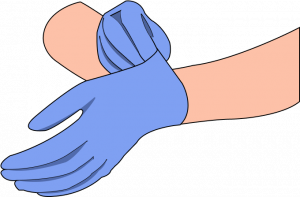
Wear gloves, if possible, as this can help prevent any infections from passing between you and the person needing help. Next, find the source of the bleeding. Once you’ve done so, open or remove clothes that may be covering the wound, then determine if it’s life-threatening. Life-threatening includes:
- Blood that is spurting out
- Blood that won’t stop coming out of the wound
- Blood that is pooling on the ground
- Clothing or bandages that are soaked through with blood
- The loss of an arm or leg
- A victim of bleeding who is unconscious
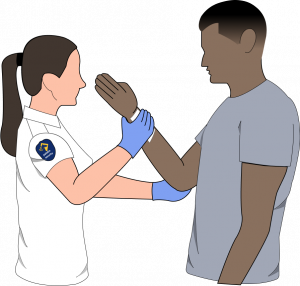
Now, it’s time to apply direct pressure using sterile dressing if possible, or clean, non-fluffy clothing.
- If you don’t have proper dressings, you can ask the person bleeding to do this themselves.
- If there is an object in the wound, don’t pull it out. Instead, apply pressure on either side of the object to push the edges together.
-
Call 911 for help

Now that you know if the wound is life-threatening or not, call 911 with all the information you’ve gathered. If you are on your own, use the hands-free speaker on your phone so you can continue to treat the person while speaking to the operator. Note the victim’s age, sex, injury, and situation (what may have led to the injury). You can find more tips in our emergency scene management blog.
-
Apply dressing and bandages to help maintain pressure
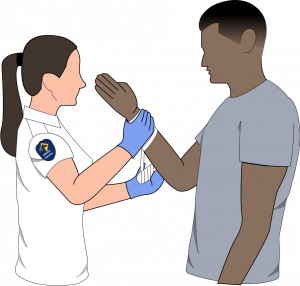
Depending on the severity of the injury, the best way to go about this is to apply a tourniquet if properly trained or to pack the wound with gauze or a clean cloth and provide pressure. Proper training for a tourniquet is something Paladin Security’s National Training and Development Manager Jason Magallanes stresses.
“There is always a concern with tourniquet use because of improper application that can make the injury worse,” says Magallanes. “If the casualty goes into septic shock or it causes serious damage to the associated limb, it might need to be amputated.”
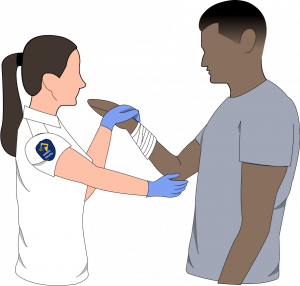
Note that you don’t want to press too hard or wrap too tightly, which could restrict their circulation. You can check by pressing one of the nails or skin beyond the bandage down for five seconds until it turns pale, and release. If the colour doesn’t return within two seconds, the bandage is too tight.
-
Treat for shock
If a person loses too much blood, they could potentially develop shock. According to St. John’s Ambulance, shock does not always mean emotional shock; it’s a life-threatening condition often caused by the loss of blood.
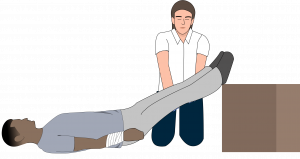
Symptoms of shock range from a rapid pulse and cold and clammy skin, to nausea and vomiting, then escalates to becoming unresponsive and losing consciousness. If you spot these symptoms, lay the person down and find a way to keep them warm. It’s also a good time to raise and support their legs so they are above the level of their heart. Once you’ve done that, loosen any tight clothing around their neck, chest, or waist.
-
Support the injury
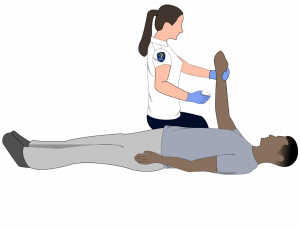
Continue to compress and elevate the injury, if possible, until help arrives. If the bleeding starts seeping through the dressing, don’t remove it. Instead, add a second bandage on top. If it continues to show through, remove both dressings and start again.
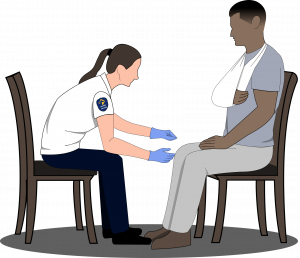
If it’s an upper-body injury, support that part with a sling or bandage the continue to check the circulation every 10 minutes.
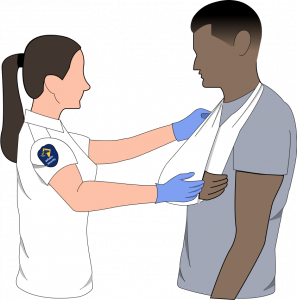
Finally, be sure to monitor the patient, including their responsiveness, until EMS arrives. If for any reason they become unresponsive or unconscious, get ready to start CPR.
Remember, it’s your responsibility to keep on top of your training if you hold a certificate in first aid. In addition to reading your first aid training materials, we highly recommend continuously practicing your skills through scenario-based training and emergency drills.
For more Safety Tips around the security industry, make sure to read these helpful articles!
Photo by Claudio Schwarz | @purzlbaum on Unsplash