




“If you don’t use it, you’ll lose it”.
-Jason Magallanes, National Training and Development Manager
When it comes to first aid, keeping up on your skills and new information is crucial. If you aren’t performing CPR daily or assisting someone who’s having a stroke (which most of us aren’t), the training can quickly and easily be forgotten. But that means when it is time to step in during an emergency, what will you remember?
We want to help keep first aid and lifesaving skills at the top of your mind, so we have created an eight-part mini-series that will appear once a month to do just that. Our first two topics were emergency scene management and severe bleeding. This month’s topic is how to deal with broken bones.
HOW TO TREAT BROKEN BONES
Broken bones, while painful and debilitating, are not usually life-threatening. If you come across someone who has any kind of broken bone and needs treatment, it is important to treat the injury as best as possible. Treatment could be as simple as immobilizing or supporting the limb to help reduce the pain and prevent further injury.
TYPES OF BREAKS
A fracture is when there is a break or crack in a bone, and it can either be considered open or closed. Closed is when the skin is still covering the fracture and the bone is not protruding, while open is when the skin around the bone is broken. Be mindful of this as an open fracture could lead to infection.
SYMPTOMS OF A BROKEN BONE
Broken bones can present all kinds of signs and symptoms, including the following:
- Intense pain to the injured area that gets worse when you move it
- Numbness in the injured area
- Bluish colouring, swelling, or deformity
- Bone protruding through the skin
- Heavy bleeding
An easy way to recognize the signs is to use the acronym SLIPS:
S – swelling, bruising
L – loss of use of the limb
I – irregularity, deformation
P – pain, tenderness at the site
S – shock, from blood loss and pain
TREATING A FRACTURE
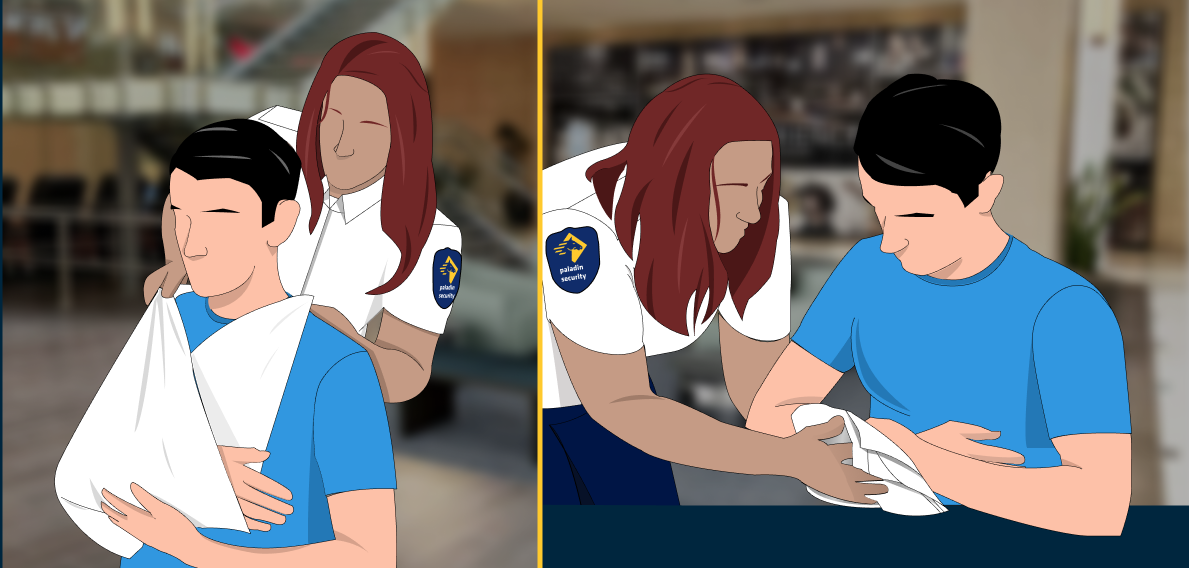
Once you’ve assessed the casualty, it’s time to start treating. As mentioned above, the best thing to do with bone or joint injuries is to immobilize in order to prevent further damage or pain. Immobilization helps keep the ends of the bone from rubbing together and causing further damage. Note that immobilization with a split should only be done when the patient is being taken away for help, not when EMS has been called to the scene.
- Start by checking on their circulation below the injury, is it restricted?
- Be sure to dress open fractures and stop any bleeding using sterile bandages before immobilizing.
- Immobilize the area. If the person has suffered a back or neck injury, it is important to have them stay as still as possible. If they have broken bones in a limb, pad, form, or shape a splint using the uninjured limb.
- If pain increases, stop moving the extra limb.
- If using a sling, pad under the arm before applying bandages. Once you’re done creating the splint or sling, ice if possible.
- Finally, check circulation once again and compare it to before immobilizing. This is also a good time to check and treat for shock. Help them get into a comfortable position and cover them with a blanket if you have one.
Another way to manage the swelling and pain is with RICE:
R - rest
I - ice
C - compress
E - elevate
Resting the injury takes the weight off of it, while icing keeps the swelling down. Compressing also reduces swelling as well as the pain that comes along with the injury. Finally, elevating the injury allows for continuous blood flow.
Remember, as a first aider, you can help them from getting worse but can’t fix them. You are providing aid to their injury to the best of your ability and skills nothing more. Be sure to follow the proper procedures and call. The sooner the casualty can receive medical help the higher the chance of full recovery.
For more Safety Tips around the security industry, make sure to read these helpful articles!